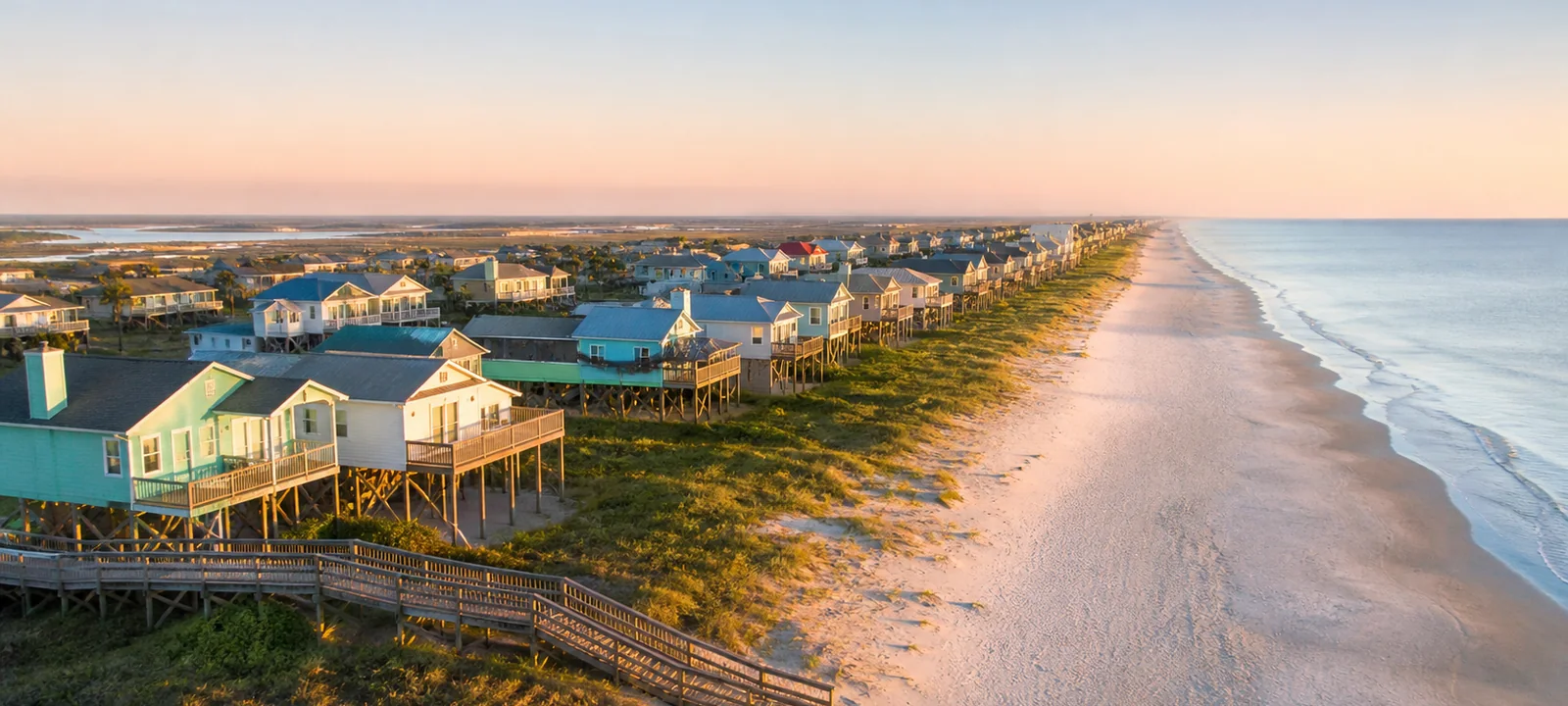
The listing price is the easy part. Insurance here is three policies and can run five figures a year. Call (832) 207-3277 and we will price the whole carrying cost before you fall for a house.
The Agency Team, 1111 N. Loop W. Suite 860, Houston TX 77008. Broker Waldina Galeano, TREC #665052. Over 100 agents and more than 1,000 Houston families served each year.
The purchase price is the smaller half of the decision. A median sale price of $506,000, up 23.4% year over year, is what shows on the listing. What does not show is that coastal ownership here runs on three separate insurance policies rather than one: a homeowners policy, a federal flood policy through NFIP, and a windstorm policy through TWIA. Combined, those commonly land somewhere between $6,000 and $18,000 or more per year depending on value, elevation, construction, and flood zone.
Run that against the mortgage and it changes the math. On a $506,000 purchase, a $14,000 insurance year is more than $1,100 a month before principal, interest, or taxes. Buyers who budget from a Houston mainland frame of reference get to closing and find the payment is nothing like what they modeled.
The flip side is that elevated newer construction with wind resistant features generally prices lower on all three policies. Two houses on the same street with the same square footage can carry wildly different carrying costs based on when and how they were built, and that difference is worth more than a granite countertop.
I tell every Crystal Beach buyer the same thing before we look at a single house: get me the elevation certificate and the windstorm certificate first. Not after the inspection, first. A beautiful house with no TWIA certification is a house you may not be able to insure, which means you may not be able to finance it, which means the next buyer will have the same problem when you go to sell. Elevation is the asset out here. Everything else is finishes. Waldina Galeano, Broker and CEO, The Agency Team
TREC Broker License #665052
Reaching the mainland means the Galveston to Port Bolivar ferry or a long drive around. There is no bridge. That single fact sorts the buyer pool into second home and rental investors on one side and a small number of committed full time residents on the other, and it is why the market moves the way it does.
Homes here take about 140 days to sell and typically draw one offer. Around 26 homes sold in a recent month, with 363 waterfront properties listed at a median asking price near $499,000. That is a market with real depth of supply and buyers who are shopping deliberately, not competing.
For a seller, that means a listing here is a season, not a weekend. Price it as though the buyer will compare it against 300 alternatives, because they will. For a buyer, the same numbers are leverage, particularly on anything that has already been sitting.
On the peninsula, elevation is not a detail, it is the asset. It drives the flood premium, the windstorm premium, and how the house performs in a storm. Before you get attached to a property, get the elevation certificate, the current flood zone designation, and the TWIA certificate of compliance confirming the structure meets windstorm building requirements.
That last document is the one people skip and regret. Without a valid windstorm certification, a structure can be difficult or expensive to insure, which in turn makes it difficult to finance and difficult to resell. Ask for it early, in writing, before inspection money is spent.
Also ask what has been rebuilt and when. The peninsula has been through major storms, and a great deal of the current housing stock reflects that. Rebuild date, permit history, and construction method tell you more about the next thirty years than the finishes do.
The buyer is usually one of three people: a Houston household buying a weekend place within a couple of hours of home, an investor buying for short term rental income, or someone leaving the mainland entirely for beach frontage they could not afford in Galveston proper.
That mix is why prices climbed 23.4% year over year even with a slow absorption rate. Demand is not commuter demand and it does not track Houston employment the way the inland market does. It tracks discretionary income, interest rates, and how recent the last storm was.
If you are buying for rental income, model it on the full carrying cost including all three insurance policies and off season vacancy, not on peak summer nightly rates. The properties that work as investments here work because someone did that arithmetic honestly up front.
The median sale price was about $506,000 in the most recent month, up 23.4% year over year. There are roughly 363 waterfront homes listed at a median asking price near $499,000, so supply is deep and buyers have real choice.
Plan on three separate policies: homeowners, federal flood through NFIP, and windstorm through TWIA. Combined they commonly run $6,000 to $18,000 or more per year depending on the property value, elevation, construction type, and flood zone. Newer elevated construction with wind resistant features generally qualifies for lower rates.
About 140 days, typically drawing one offer. Roughly 26 homes sold in a recent month. Sellers should plan for a season on market rather than weeks, and price against the full standing inventory.
Either the Galveston to Port Bolivar ferry or the long drive around through Winnie and High Island. There is no bridge to the peninsula. That access constraint shapes the entire market and is the main reason the buyer pool is weighted toward second homes and rentals rather than daily commuters.
Three at minimum: the elevation certificate, the current FEMA flood zone designation, and the TWIA certificate of compliance showing the structure meets windstorm building requirements. Missing windstorm certification can make a property hard to insure, hard to finance, and hard to resell. Also ask for rebuild date and permit history.
It can be, if the model is honest. Build it on the full annual carrying cost including all three insurance policies plus off season vacancy, not on peak summer nightly rates. Elevated newer construction usually pencils better because it insures cheaper, not because it rents higher.
Market figures: Redfin Crystal Beach market data and TGS Insurance coastal premium guidance . Figures move monthly. Call for the current read on your street.
Send us the address and we will come back with comps, the elevation and flood zone we can pull, and a realistic annual carrying cost including all three insurance policies.